


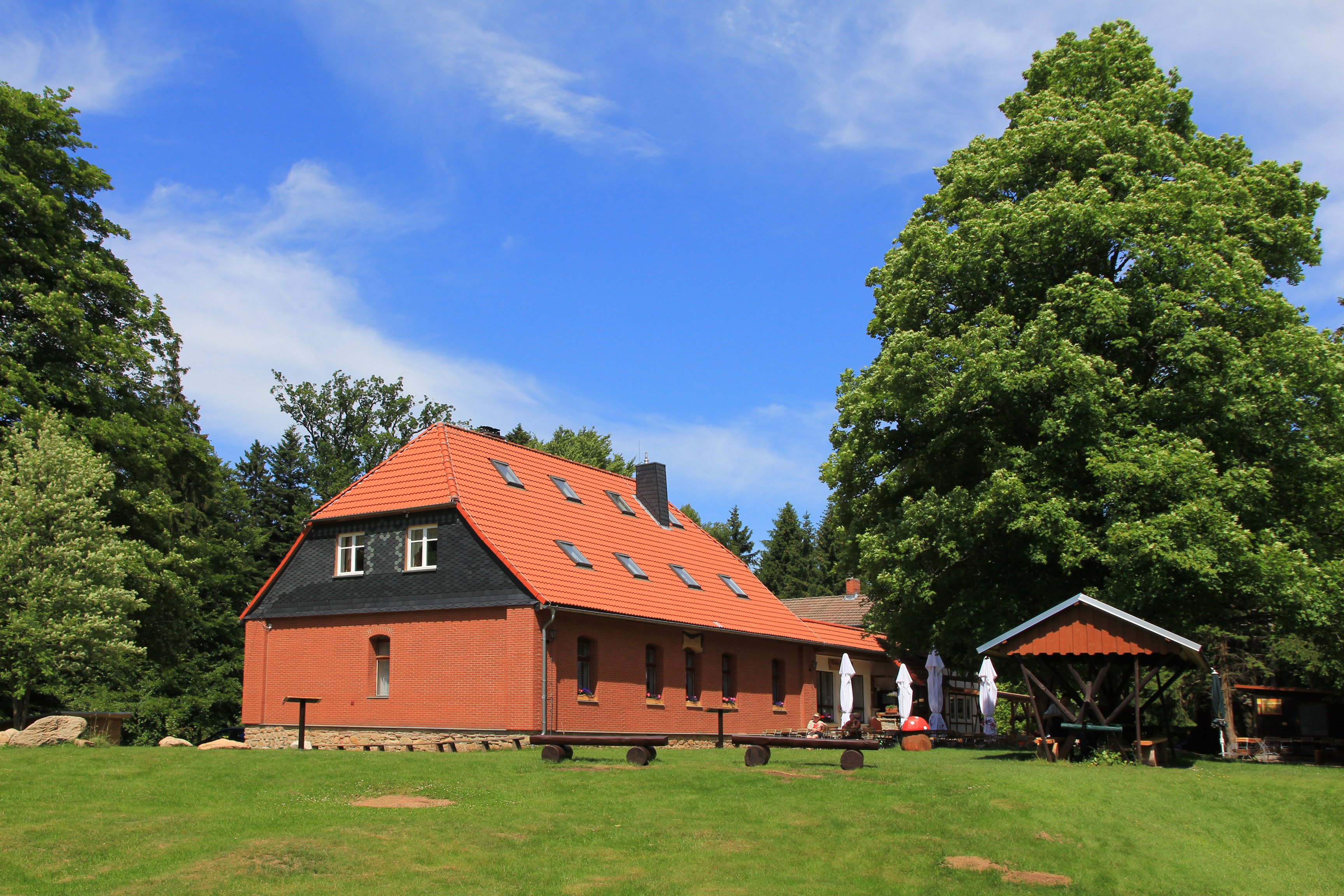
History and significance of Plessenburg Castle in the Harz Mountains
According to the old system, Plessenburg Castle, which is shown on the map of the county of Wernigerode in 1768, is located on the Königskoll forest site. (This name refers to a charcoal site where fir wood was charred into charcoal). Construction of the Plessenburg hunting lodge began on October 27, 1775 and was completed in time for the hunting season in October 1776.
Pleß is a town in Upper Silesia which came into the possession of the Princes of Anhalt-Köthen shortly before this date. Prince Friedrich Erdmann zu Anhalt-Köthen-Pleß married the Count’s daughter Louise Ferdinande on June 13, 1766. The name Plessenburg refers to this son-in-law.
In 1880, the kitchen and staff house was built next to the hunting lodge in the local half-timbered style. Plessenburg Castle remained in the possession of Prince Christian Ernst zu Stolberg — Wernigerode until 1945. In 1945, the prince sold two thirds of his North Harz forest to the Ilsenburg forestry administration. From 1967 to 1973, the hunting lodge was used as a recreational facility.
On June 25, 1973, Bernhard and Ruth Krebs opened a restaurant in the former kitchen and staff house. In 1980, the hunting lodge and the former staff house were joined together to create today’s “Plessenburg” forest inn, which is located in the heart of the Harz National Park and is now run by the second and third generation.
From Ilsenburg, follow the signposted hiking trails through the Ilse Valley, but there is also a beautiful hiking trail from Darlingerode or Drübeck through the Tänn Valley to Plessenburg Castle.
