


The “Rastplatz am Clusberg” stamping station is located between Pansfelde and Stangerode.
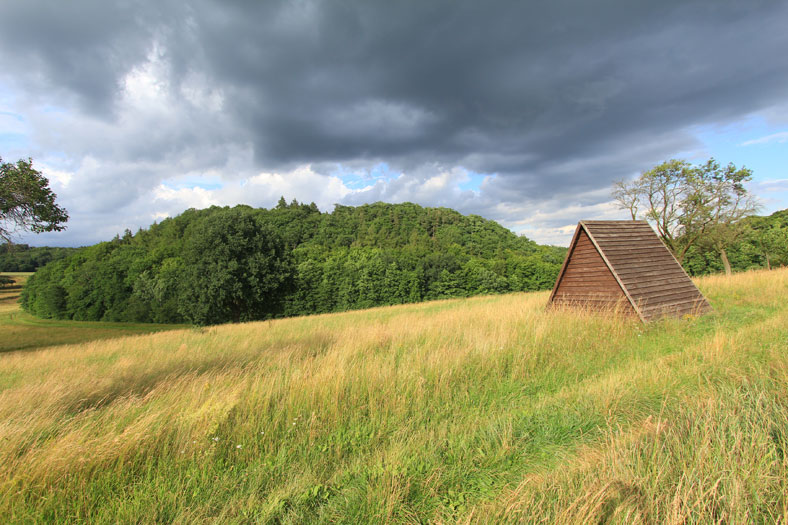
The Clusberg was placed under nature conservation protection in 1994 due to its special scenic beauty, caused by a variety of landscape elements such as rock formations, steep slopes and the Schwennecke valley.
In the north there is an artificial pond, which is an extremely valuable habitat for dragonflies, amphibians and other water-related organisms. The south-eastern section of the Clusberg is dominated by an old, ecologically valuable hornbeam forest, which is therefore worthy of protection, with significant populations of the stinking water lily. On the south-western slope there are species-rich dry oak forests with vigorous sessile oaks. Dead thick wood is used as a habitat by numerous endangered insect species and cavity-nesting birds such as stock dove and black woodpecker.
The slopes are home to near-natural mountain meadows with a rich flora. The orchard meadow on the eastern edge of the nature reserve completes the picture of an ecologically extremely valuable, richly structured natural area that is highly worthy of protection.
The quickest way to reach the stamping point at the rest area is from Pansfelde via well-signposted hiking trails. From the bison enclosure in Stangerode, follow the signposted paths to Stangerode, some of which lead along the Schwennecke river.
